How Do Foreign Patients Prepare for Vision Correction at Bright Eye Clinic?
Published by WECIRCLE with its partner medical network. Reviewed under Korean medical advertising rules.

Navigating vision correction in a new country can feel daunting, but at Bright Eye Clinic in Gangnam, the process for foreign patients is streamlined. It typically begins with an initial consultation and comprehensive eye exams, followed by a chosen procedure like LASIK or SMILE Pro, and concludes with structured follow-up care. While specific costs depend on your eye health and the chosen method, procedures generally range from KRW 2,000,000 to KRW 5,000,000 per eye (approximately USD 1,500 to USD 3,800, subject to exchange rates), with most patients resuming daily activities within 1-3 days and vision stabilizing over 1-3 months. These are general ranges, and your exact journey and investment will be determined after a thorough pre-operative examination.
Many international visitors choose South Korea for its advanced medical technology and experienced specialists, especially in ophthalmology. Understanding the full process from preparation to post-operative care can significantly ease any concerns you might have. We believe in complete transparency, providing clear information on what to expect at each stage of your vision correction journey.
What are the first steps for booking a consultation?
The first step for any foreign patient considering vision correction is to schedule an initial consultation. This can typically be done through our official website or by contacting our international patient coordinator via WhatsApp, who provides dedicated English-language support. You'll discuss your general eye health, any previous surgeries, and your vision goals. Having your current glasses prescription handy can be helpful, though not strictly necessary at this initial stage.
During this initial contact, our team will answer preliminary questions and explain the general flow of your visit. We aim to make this as smooth as possible, understanding that you might be traveling from afar. This also allows us to allocate sufficient time for your comprehensive examination and ensure an English-speaking medical professional is available for your consultation.
It's important to provide as much detail as possible about your medical history, especially regarding any chronic conditions, allergies, or medications you are currently taking. This helps our specialists prepare for your visit and recommend the most suitable diagnostic tests. We prioritize your safety and ensure all pre-operative assessments are tailored to your individual health profile.
What does the comprehensive eye examination involve?
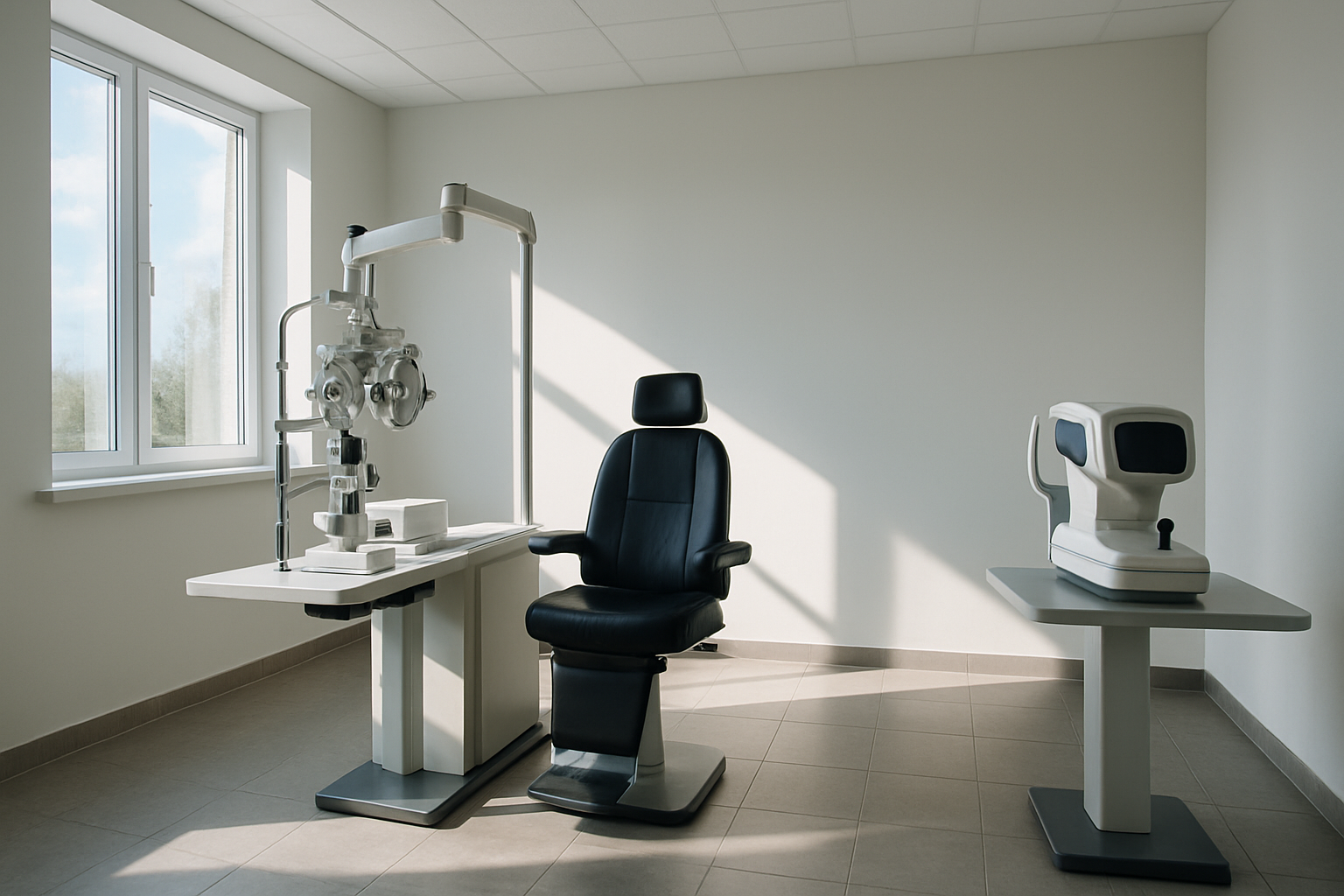
A thorough pre-operative eye examination is critical to determine your eligibility for vision correction and to select the most appropriate procedure. This comprehensive assessment typically takes about 2-3 hours and involves several advanced diagnostic tests.
You can expect tests such as corneal topography to map the curvature of your cornea, pachymetry to measure corneal thickness, wavefront analysis to detect higher-order aberrations, and pupil dilation to examine the retina. These tests provide our medical team with a detailed understanding of your eye's unique characteristics. For instance, the corneal thickness measurement is a key factor in determining suitability for procedures like LASIK, with a minimum residual stromal bed often required to be around 250-300µm post-ablation for safety, though this can vary based on individual factors and the chosen procedure.
Following these tests, you will have a one-on-one consultation with one of our experienced ophthalmologists. Our medical director, Dr. Kim, a board-certified ophthalmologist with over 15 years of experience in refractive surgery, will personally review your results and discuss the best options for you. This is an excellent opportunity to ask any questions and address concerns directly. Remember, the goal is to ensure both optimal vision outcomes and long-term eye health.
It is generally advised to stop wearing soft contact lenses for at least 3-7 days and hard contact lenses for 2-4 weeks prior to your examination. This allows your cornea to return to its natural shape, ensuring accurate diagnostic results. Neglecting this step can lead to inaccurate measurements and potentially unsuitable procedure recommendations.

Which vision correction procedure is right for me?
Choosing the right vision correction procedure depends heavily on your individual eye condition, lifestyle, and preferences. At Bright Eye Clinic, we offer a range of advanced options, including LASIK, LASEK, and SMILE Pro, each with distinct characteristics.
Here's a brief overview of common procedures and their key considerations:
| Feature | LASIK | LASEK | SMILE Pro |
|---|---|---|---|
| Corneal Flap | Yes (created) | No (epithelium loosened) | No (lenticule extracted through small incision) |
| Recovery Time | Fast (1-2 days for functional vision) | Slower (3-7 days for functional vision, more discomfort) | Very Fast (1-2 days for functional vision) |
| Discomfort Level | Minimal | Moderate to high (initial days) | Minimal |
| Dry Eye Risk | Moderate (due to nerve severance) | Lower (epithelium regrows) | Lowest (minimal nerve damage) |
| Suitable For | Mild to moderate myopia/astigmatism | Thin corneas, active lifestyles | Mild to severe myopia/astigmatism, active lifestyles |
| Typical Cost Factors | Standard | Standard | Higher (advanced technology) |
Your ophthalmologist will guide you through these options based on your examination results. For instance, if you have a very active lifestyle or thinner corneas, LASEK or SMILE Pro might be more suitable due to their flapless nature and reduced risk of flap-related complications. In a 2023 patient satisfaction survey conducted by a major ophthalmology journal, over 90% of patients reported high satisfaction with their chosen refractive surgery, highlighting the effectiveness of personalized recommendations.
It's worth noting that while all procedures aim for visual improvement, the long-term stability and potential side effects can vary. The decision will always be a collaborative one between you and your doctor, ensuring you are fully informed about the benefits and risks associated with each option. This is where the detailed pre-operative assessment and consultation become invaluable.
What factors influence procedure choice?
Several key factors are considered when recommending a procedure. Your corneal thickness and curvature are paramount, as these directly impact the amount of tissue that can be safely removed. Your refractive error (nearsightedness, farsightedness, astigmatism) also plays a significant role, with some procedures being more effective for higher prescriptions.
Beyond the physical aspects, your lifestyle is a critical consideration. If you participate in contact sports or have a job with a high risk of eye trauma, a flapless procedure like LASEK or SMILE Pro might be recommended to avoid potential flap complications. Your personal preference for recovery time and tolerance for initial discomfort will also be part of the discussion. From here on, your specific medical findings from the examination will largely dictate the viable options.
What should I expect on the day of the procedure and during recovery?
On the day of your procedure, you will receive detailed instructions, including when to arrive and what to avoid (e.g., makeup, perfumes). The procedure itself is typically quick, often taking only about 10-15 minutes per eye for the laser application. You will be made comfortable, and anesthetic eye drops will be administered to ensure a pain-free experience.
After the procedure, you will spend a short period in a recovery area. It is normal to experience some mild discomfort, watery eyes, or light sensitivity immediately afterward. You will be given protective eyewear and a post-operative care kit, including prescribed eye drops and instructions for their use. It is crucial to follow these instructions precisely to ensure proper healing and prevent complications.
For most patients, initial vision improvement is noticeable within 24-48 hours. However, full visual acuity and stability can take anywhere from a few weeks to several months. We recommend arranging for someone to accompany you home after the procedure, as your vision may be blurry. Follow-up appointments are scheduled to monitor your healing progress and ensure optimal results. These are usually 1 day, 1 week, 1 month, and 3 months post-operation, though this can be adjusted for international patients.
Based on data from the Korean Ophthalmological Society, approximately 85% of patients achieve 20/20 vision or better after refractive surgery, with the remaining experiencing significant improvement. Individual results can vary based on factors like pre-operative prescription, age, and overall eye health. Consistency in using prescribed eye drops and avoiding rubbing your eyes are key to a successful recovery.
Preparing for Your Consultation: A Checklist for Foreign Patients
To make your consultation as efficient and informative as possible, here's a checklist of things to consider and prepare:
• Current Prescription: Have your most recent glasses or contact lens prescription available, especially if your vision has changed recently.
• Contact Lens Holiday: Ensure you have stopped wearing soft contact lenses for at least 3-7 days, and hard contact lenses for 2-4 weeks, before your examination.
• Medical History: Be ready to discuss your full medical history, including any existing health conditions, allergies, and medications you are currently taking.
• Previous Eye Surgeries: Inform us about any prior eye-related procedures or treatments you may have had.
• Questions: Prepare a list of questions or concerns you have about the procedures, recovery, or costs.
• Accommodation/Travel: Plan your accommodation and travel arrangements, especially for the day of the procedure when your vision might be compromised.
• Budget: Have a clear understanding of your budget, keeping in mind that the final cost will be determined after your examination.
• Support Person: Consider bringing a friend or family member, especially if you anticipate needing assistance post-procedure.
Where is Bright Eye Clinic located, and how can I get there?
Bright Eye Clinic is conveniently located in the vibrant Gangnam district of Seoul, making it accessible for both local and international patients. Our address is 531 Gangnam-daero (B722 Tower), Seocho-gu, Seoul, South Korea.
Getting to our clinic is straightforward using Seoul's efficient public transportation system. You can reach us right outside Nonhyeon Station (Line 7 / Sinbundang Line) Exit 4. We are also approximately 500m from Sinnonhyeon Station Exit 2. For detailed directions, you can easily find us on Naver Maps or other navigation apps.
Our dedicated international patient team is always ready to assist with directions or any other inquiries you might have. Feel free to contact us at 02-1544-3994 or through WhatsApp for personalized support before your visit.
마치며
Embarking on a vision correction journey at Bright Eye Clinic means choosing a path of clarity and expert care. From the initial consultation to your final follow-up, our team is committed to providing a transparent, supportive, and medically sound experience, particularly for our international patients.
Remember, understanding the step-by-step process, preparing adequately for your examinations, and openly communicating with our specialists are key to achieving your desired visual outcomes. We encourage you to use the resources available, including our English-speaking coordinators, to clarify any doubts.
We look forward to welcoming you to Bright Eye Clinic and helping you achieve clearer vision in Seoul. Your journey to a brighter future, free from glasses or contacts, begins here.
함께 읽으면 좋은 글
Tell us what you're considering. Free personalized quotes and honest answers, in English.
Interested in this clinic?
Message us with your questions. We help you check availability, get a quote and book. Free for you.